Plants are one of God's living creations that are very important for humans and the sustainability of the earth. Plants are the result of a long evolution that occurred on earth, starting from single-celled organisms to the organisms we have now.
Plants have a vast biodiversity. For example, banana plants have many varieties ranging from differences in having seeds or not to having different skin colors. This biodiversity occurs because plants receive different inputs such as different soil nutrients, different light intensities, different temperatures, and interactions with different organisms between one place and another.
Furthermore, plants have undergone significant advancements as a result of human activities in search of the best varieties for consumption. For instance, people conduct research to obtain seedless bananas from the banana varieties available in their environment at that time.
Plants are indeed crucial for the sustainability of humans and other living organisms on earth. They not only provide oxygen but also serve as habitats for other creatures and provide materials for humans to fulfill their needs.
What Photosynthesis Is ?
One of the advantages of plants is that they are autotrophic living organisms, meaning they can create their own food. Unlike heterotrophic organisms that require other organisms as a source of food, heterotrophic organisms are mostly animals and humans.
Autotrophic organisms obtain food through a process called photosynthesis. Plants obtain nutrients from the soil, sunlight from the sun, and carbon from the air in the form of carbon dioxide to convert it into the simplest form of glucose.
Glucose is a vital substance for the survival and development of living organisms. Plants with less efficient photosynthesis tend to experience slower growth because they do not have a surplus of glucose.
Furthermore, plants create food reserves such as fruits, tubers, and seeds that are very beneficial to humans. They are obtained from the process of photosynthesis and store the surplus glucose as fruits, tubers, or seeds.
Photosynthesis also plays a role in creating a local environment that is rich in oxygen, making it a more suitable habitat for animals. Even environments with more oxygen tend to make insects healthier, and people living in oxygen-rich environments tend to have longer life spans.

Respiration Is ?
In addition to photosynthesis, plants also carry out another activity that is its opposite. While photosynthesis creates oxygen, respiration produces carbon dioxide.
Respiration is a process in which plants use glucose produced during photosynthesis for energy and growth. Therefore, plants need to produce enough glucose to meet their energy needs during respiration.
Respiration can occur simultaneously with photosynthesis. We may often see that plants are smaller in size in the morning than they are after sunset. This is because plants receive enough supply to carry out respiration.
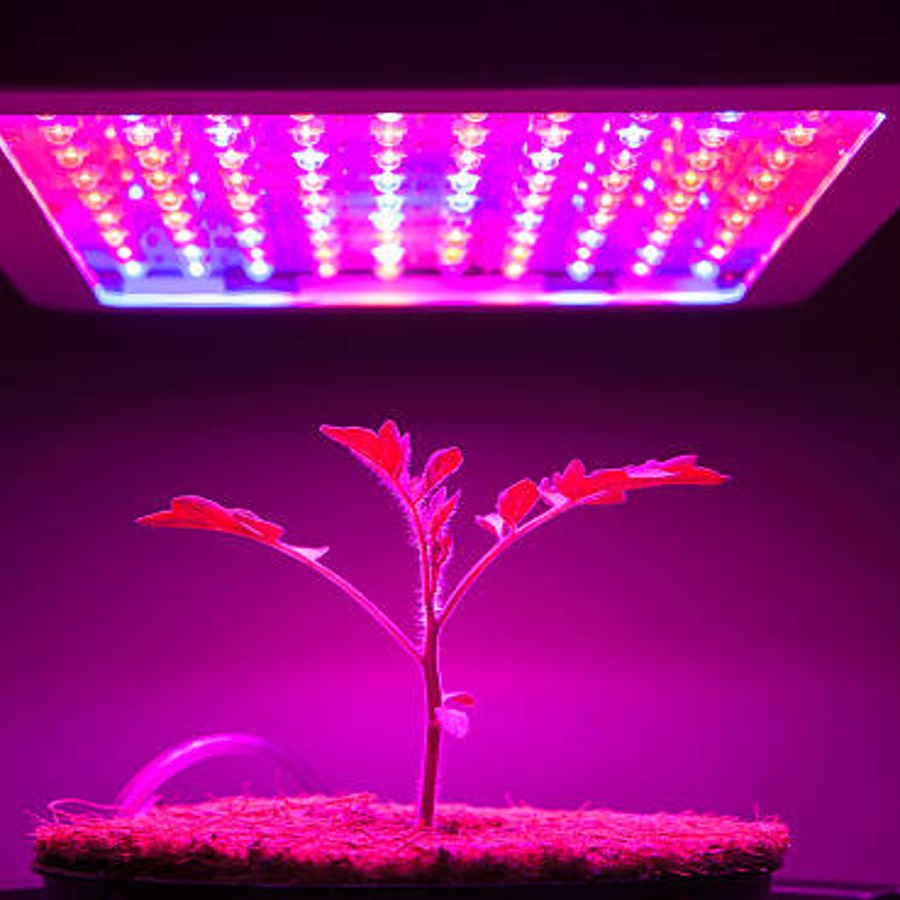
During the daytime, plants carry out both respiration and photosynthesis, but at night, they only perform respiration. This means that all plants must have enough surplus glucose to carry out respiration at night. Adding supplemental light at night can help plants grow and produce fruit faster by enabling photosynthesis to occur during the night.

Type of Light For Plant
One of the important inputs or nutrients for plants is light. Every plant needs it to perform photosynthesis and create glucose for their growth and reproduction.
Light has a wide spectrum of colors and carries different types of light, some are beneficial and some are harmful. For example, infrared light is not useful if the intensity is excessive because it will cause stress on the plant due to high leaf temperature, resulting in decreased photosynthesis performance. Some greenhouses even coat their glass to block infrared light from entering and hitting the plants.
On the other hand, for light with a spectrum of colors, there are those that have no effect on plants and those that affect the process of photosynthesis. For example, the green spectrum is not useful at all for plants because it tends to be reflected back by plant leaves, and only a few types of plants absorb green spectrum (and even then, the intensity is low).

Red Or Blue Is Good For Plant ?
Natural sunlight contains a wide spectrum of colors. Almost every color we know exists in sunlight, which is why we see rainbows after rain as water droplets refract sunlight.
However, only two color spectrums are most absorbed by plants. The light spectrum most absorbed and needed by plants are red and blue, although both have different effects on plants.
The red color spectrum has many spectrum indices, but the useful spectrum is 600 to 750. In this spectrum, plants activate Phytochrome. When active, Phytochrome is useful for seed germination, chlorophyll synthesis, stem elongation, leaf growth, and flowering. Therefore, the red spectrum tends to impact plant growth.
Meanwhile, the blue spectrum that affects plants is in the range of 320 to 500. When plants receive light with this spectrum, it activates Zeitlupe, Phototropin, and Cryptochrome. The blue spectrum is an indicator for plants to perform the circadian clock cycle. If plants receive too much input of the blue spectrum, it will slow down stem elongation, causing the stem to become thicker.
Relying on only one color spectrum without a clear plan will harm plants, so it is necessary to combine these two color spectrums with different intensities depending on your plant's conditions at the time.